Farming and Climate Change Fuel Harmful Algal Blooms
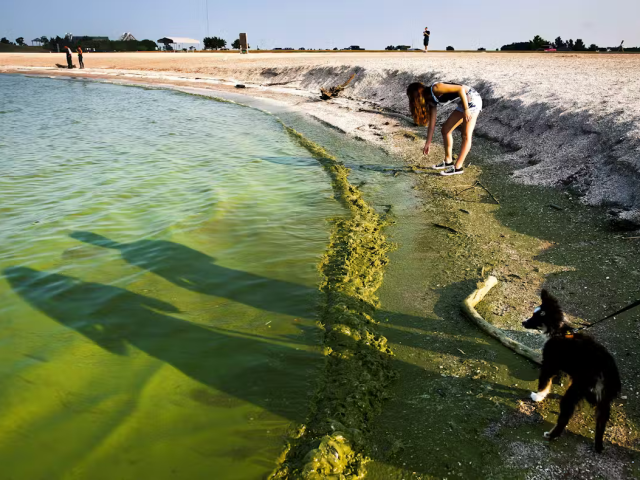
Federal scientists have forecasted a mild to moderate harmful algal bloom (HAB) season for Lake Erie in 2025. However, experts caution that even moderate blooms, like the one that contaminated Toledo’s water in 2014, can pose significant health risks. Harmful algal blooms are typically caused by cyanobacteria growing in nutrient-rich waters. These algal colonies can release toxins that are harmful to ecosystems, people, and pets.
These blooms are increasingly fueled by nutrient runoff from agricultural fields, especially fertilizers containing phosphorus and nitrogen. While earlier efforts in the 1970s reduced pollution from sewage and household products, modern industrial farming practices are now the primary contributors. Climate change worsens the problem by creating warmer water temperatures and more frequent heavy rainstorms, both of which promote bloom growth and increase nutrient runoff.
Gregory J. Dick, director of the Cooperative Institute for Great Lakes Research, and his research team use DNA testing to identify the specific toxins in Lake Erie blooms, including new variants of microcystins and saxitoxin, both of which may pose serious health threats. These emerging toxins are difficult to detect with standard methods and could become more prevalent as water temperatures rise.
The health effects of HABs range from gastrointestinal distress and skin irritation to more serious long-term risks such as liver cancer and neurological damage. Pets are especially vulnerable, sometimes dying after exposure. Moreover, toxins can become airborne, raising concerns for people who live near or recreate on the water.
The blooms are starting earlier and lasting longer due to warmer temperatures. In 2025, toxins were detected as early as April 28—earlier than ever before—and past blooms have persisted into November. Over the past few decades, the season for algal blooms has grown by up to a month.
The most effective solution, according to scientists, is reducing nutrient pollution. In Lake Erie, this means improving farming practices and restoring wetlands to trap runoff. Programs like Ohio’s H2Ohio are showing promise in these efforts, though long-term success depends on sustained funding. In areas where blooms are driven primarily by climate change, such as Lake Superior, broader action on greenhouse gas emissions will be necessary to mitigate future risks.
To read the full article, visit The Conversation.
Photo Credit: Ty Wright for The Washington Post